
Cotonou Partnership Agreement
The Cotonou Partnership Agreement is a comprehensive cooperation framework between the European Union (EU) and the member states of the Organisation of African, Caribbean and Pacific States (OACPS). It was established to strengthen political dialogue, promote sustainable economic and social development, reduce poverty, and foster closer cooperation among its Parties.
The Agreement provides a broad framework for collaboration across a range of areas, including trade, investment, regional integration, governance, peace and security, human development, climate action, and sustainable development. It also supports dialogue on issues of mutual interest and encourages cooperation based on shared principles, partnership, and mutual responsibility. In the area of trade, the Agreement has served as the foundation for economic cooperation between the European Union and OACPS member states, facilitating the development of trade arrangements that promote regional integration and support economic development.
It has also contributed to strengthening institutional capacity, improving the business environment, and enhancing participation in regional and global markets. The Cotonou Partnership Agreement has played an important role in shaping relations between the European Union and its partner countries while providing a platform for cooperation on shared economic, social, and development priorities.
The UAE has become a major trade and investment partner for Africa, driven by its strategic interests in logistics, energy, agriculture, and digital infrastructure. Several African countries have signed Comprehensive Economic Partnership Agreements (CEPAs) with the UAE, signalling a shift toward deeper bilateral economic integration.
The UAE signed its first bilateral trade agreement in February 2022 and aims to deepen ties with strategic partners around the world. The latest to join the list of partners are Nigeria and Sierra Leone, which signed their CEPAs on 13 January 2026 and 2 February 2026, respectively.
The CEPAs are meant to expand markets access opportunities, while facilitating investment flows through the lowering or eliminating tariffs, simpler customs procedures, clear and transparent rules etc.
Events
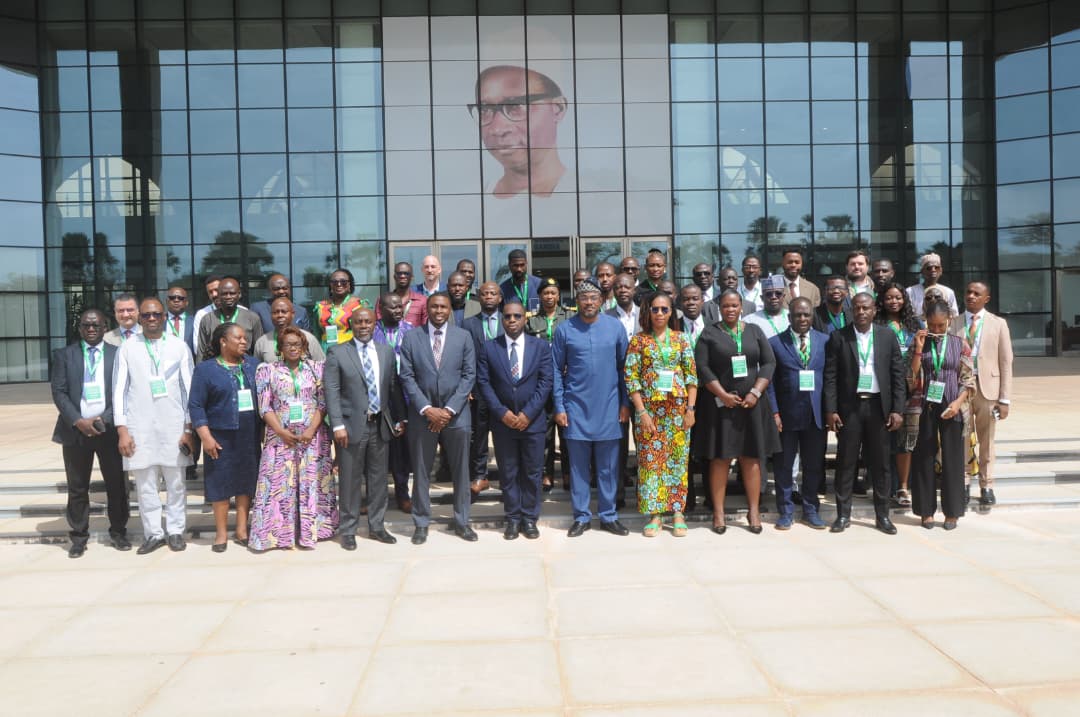
7th Regional Trade Facilitation Committee
THE ECOWAS REGIONAL TRADE FACILITATION MEETS TO EXAMINE THE STATUS OF IMPLEMENTATION OF TRADE FACILITATION REFORMS AND ACCELRATE THE ELIMINATION OF NON-TARIFF BARRIERS
The ECOWAS Commission organized the 7th Meeting of the ECOWAS Regional Trade Facilitation Committee (RTFC) in Banjul, The Gambia from 15th to 17th June 2026. The objective of the meeting was to strengthen regional coordination and advance the implementation of trade facilitation reforms in ECOWAS by enhancing border management, addressing non-tariff barriers, and promoting digitalization of cross-border trade.
In his remarks on behalf of the Minister of Trade, Industry, Regional Integration and Employment of the Gambia, Mr Lamin CAMARA, Permanent Secretary, welcomed delegates to the 7th Meeting of the RTFC in Banjul and expressed appreciation to the ECOWAS Commission for selecting The Gambia to host the Meeting. He underscored that trade facilitation remains central to the ECOWAS integration agenda and highlighted the importance of reducing the cost and time associated with cross-border trade.
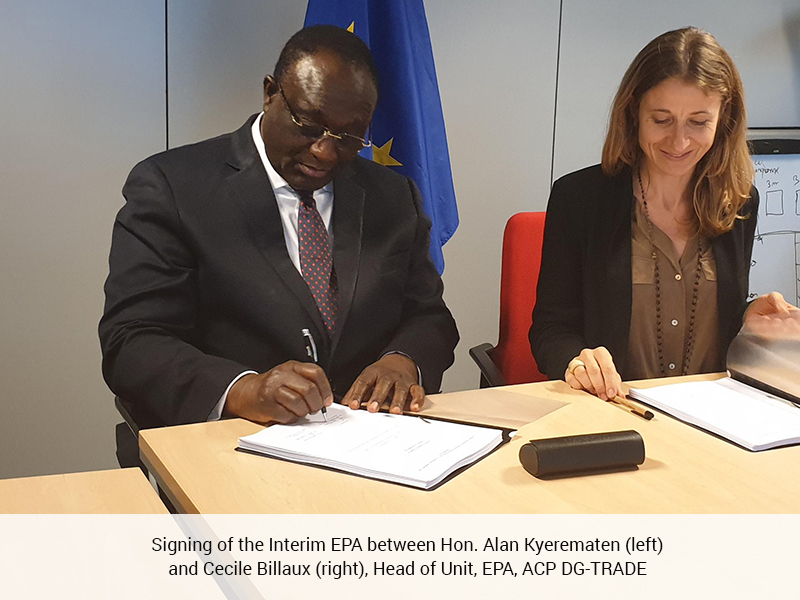
Ghana and Cote d’Ivoire have entered into Interim Economic Partnership Agreement (iEPA) with the European Union
Ghana and Cote d’Ivoire have entered into separate Interim Economic Partnership Agreement (iEPA) with the European Union
Ghana and the European Union iEPA have entered into a good only based bilateral market access agreement. The interim economic partnership agreement between Ghana and the EU was negotiated in 2007 and ratified by Ghana in 2016 and went into effect 1 July 2021.
Under the Agreement, Ghana would progressively liberalise tariffs for 80% of the total volume of exports from the EU to Ghana, with cumulative tariff cuts for approximately 22% of applicable tariff lines in 2021, 50% by 2024 and 100% by 2029.
The Interim Economic Partnership Agreement between Côte d’Ivoire and the EU was negotiated in 2008. Côte d’Ivoire ratified the Agreement in 2016. Under it, the EU provides duty-free, quota-free access for Côte d’Ivoire’s exports to the EU. For its part, Côte d’Ivoire is progressively reducing its tariffs to zero for 85 percent of its EU imports by 2029.
The gradual liberalization of Cote d’Ivoire’s market for EU products commenced 1 January 2019 with the process scheduled in five phases over a 10-year period, from 2019 to 2029. Côte d'Ivoire has liberalised 1080 tariff lines effective 1 January 2024, bringing the total number of liberalised tariff lines to 3385 or 55%.
Read more